Lung Transplant Surgery in Jaipur – Single & Double Lung Transplant | Dr. Shubham Sharma
Lung transplantation is an important treatment option for people suffering from severe and end-stage lung diseases when conventional medical treatments are no longer providing sufficient relief. It involves replacing one or both damaged lungs with healthy donor lungs to improve breathing capacity, oxygen levels, and overall quality of life. Patients exploring lung transplant surgery in Jaipur can seek specialist consultation for transplant evaluation, advanced lung failure management, and pre- and post-transplant care from Dr. Shubham Sharma.
Dr. Shubham Sharma is a Transplant and Interventional Pulmonologist in Jaipur with 11 years of experience. He holds an MBBS, DNB in Respiratory Diseases, European Diploma in Adult Respiratory Medicine, and a Fellowship in Lung Transplantation from the Medical University of Vienna, Austria. His clinical expertise includes lung transplantation, advanced lung failure, respiratory critical care, and interventional pulmonology.
What Is Lung Transplantation?
Lung transplantation is a surgical procedure in which a severely damaged or diseased lung is replaced with a healthy lung from a suitable donor. It may be considered for patients with advanced respiratory conditions that significantly affect their ability to breathe and perform everyday activities.
The procedure can involve replacing either one lung or both lungs, depending on the patient's medical condition, lung function, overall health, and donor compatibility. A detailed evaluation by a transplant team helps determine whether lung transplantation is an appropriate treatment option.
Types of Lung Transplant Surgery
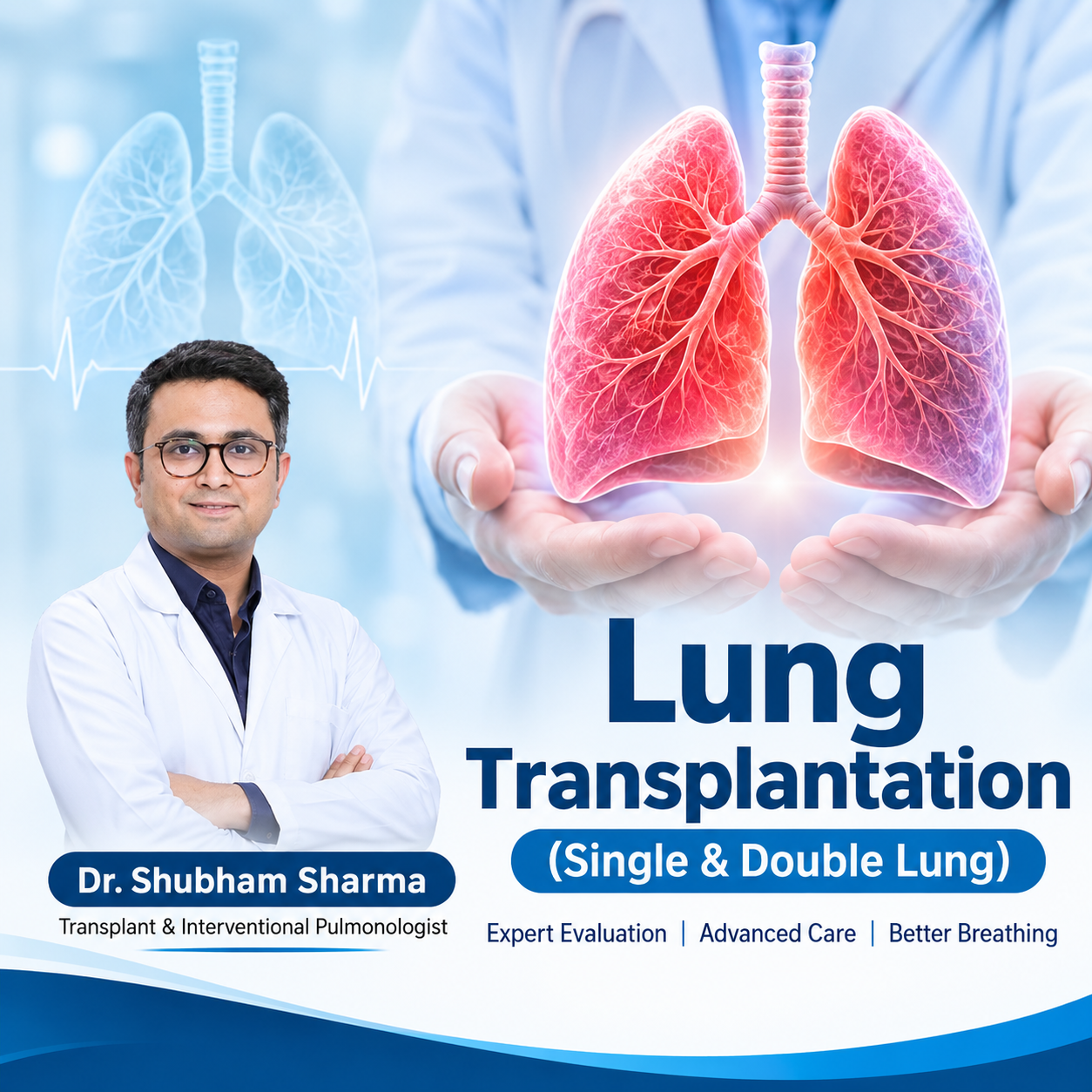
There are two major types of lung transplantation: single lung transplantation and double lung transplantation.
1. Single Lung Transplantation
Single lung transplantation involves replacing one damaged lung with a healthy donor lung. The patient's other lung remains in place. This option may be considered for selected individuals with certain advanced lung diseases, depending on their medical condition and transplant assessment.
Some important considerations include:
- The condition and functionality of the remaining natural lung.
- The type and severity of the underlying respiratory disease.
- The patient's age and overall medical condition.
- Donor lung availability and compatibility.
2. Double Lung Transplantation
Double lung transplantation, also known as bilateral lung transplantation, involves replacing both diseased lungs with healthy donor lungs. It may be recommended for patients with certain severe respiratory conditions where replacing both lungs is considered more appropriate.
This procedure is commonly considered in selected patients with:
- Severe bronchiectasis.
- Cystic fibrosis.
- Advanced pulmonary hypertension.
- Certain cases of chronic obstructive pulmonary disease (COPD).
- Other forms of end-stage lung disease.
The choice between single and double lung transplantation depends on individual medical requirements and a detailed assessment by the transplant team.
Who May Need a Lung Transplant?
Lung transplantation may be considered when a patient has severe, progressive lung disease and other available treatments are no longer sufficient to maintain an acceptable level of respiratory function.
Conditions that may require lung transplant evaluation include:
1. Pulmonary Fibrosis: This condition causes scarring of lung tissue, making it difficult for oxygen to pass into the bloodstream. Advanced cases may require transplant assessment.
2. Chronic Obstructive Pulmonary Disease (COPD): Severe COPD can cause persistent breathing difficulties and reduced lung function. Selected patients with advanced disease may be evaluated for transplantation.
3. Bronchiectasis: This condition causes permanent widening and damage to the airways, leading to repeated infections, coughing, and difficulty clearing mucus.
4. Pulmonary Hypertension: Increased pressure in the blood vessels of the lungs can place additional strain on the heart and affect breathing.
5. Cystic Fibrosis: This inherited condition can cause thick mucus accumulation, repeated lung infections, and progressive respiratory damage.
6. Advanced Interstitial Lung Disease: Some progressive interstitial lung diseases can cause significant damage to lung tissue and may require specialist transplant evaluation.
Not every patient with these conditions needs a transplant. Eligibility depends on disease progression, overall health, and a comprehensive medical assessment.
Lung Transplant Evaluation and Preparation
Before recommending lung transplantation, specialists conduct a detailed evaluation to understand the patient's respiratory condition and determine whether the procedure may be suitable.
The evaluation may include:
- Pulmonary function tests to assess breathing capacity.
- CT scans and chest imaging to examine lung damage.
- Blood tests and blood group compatibility assessment.
- Heart function evaluation.
- Assessment of other medical conditions.
- Evaluation of nutritional status and physical fitness.
- Donor-recipient compatibility assessment.
The transplant team reviews these findings before deciding on the appropriate treatment approach.
Pre- and Post-Lung Transplant Care
Lung transplantation requires continuous medical attention before and after surgery. Pre-transplant care focuses on evaluating lung function, managing existing respiratory conditions, and preparing the patient for the procedure.
After transplantation, patients require regular monitoring to assess the functioning of the transplanted lungs and identify possible complications.
Post-transplant care may include:
- Regular respiratory and medical assessments.
- Immunosuppressive medications to reduce the risk of organ rejection.
- Monitoring for respiratory infections.
- Pulmonary rehabilitation and breathing exercises.
- Follow-up investigations and lung function testing.
- Guidance regarding nutrition, physical activity, and lifestyle changes.
Long-term follow-up is essential because transplant recipients require ongoing medical supervision.
Role of ECMO in Advanced Lung Failure
Extracorporeal Membrane Oxygenation (ECMO) is an advanced life-support technique that temporarily supports oxygenation and carbon dioxide removal when the lungs are unable to perform these functions adequately.
In selected patients with severe respiratory failure, ECMO may be considered as temporary support during critical illness or in specific lung transplant-related situations. Its use depends on the patient's clinical condition and the treating team's assessment.
Lung Transplant Consultation in Jaipur with Dr. Shubham Sharma
Dr. Shubham Sharma is a Transplant and Interventional Pulmonologist in Jaipur with specialized training in lung transplantation and advanced respiratory medicine.
His qualifications include:
- MBBS
- Diplomate of National Board (DNB) – Respiratory Diseases
- European Diploma in Adult Respiratory Medicine – Madrid, Spain
- Fellowship in Lung Transplantation – Medical University of Vienna, Austria
His areas of clinical expertise include:
- Single and double lung transplant evaluation.
- Pre- and post-lung transplant care.
- Advanced lung failure management.
- Respiratory critical care.
- ECMO support.
- Interventional pulmonology.
- Pulmonary rehabilitation.
Patients looking for guidance regarding lung transplantation in Jaipur can consult Dr. Shubham Sharma for an assessment of their respiratory condition and advice regarding suitable treatment options. Transplant surgery, when indicated, requires coordination with an appropriate transplant surgical centre.
Frequently Asked Questions:
1. What is the difference between single and double lung transplantation?
Single lung transplantation replaces one damaged lung with a donor lung, whereas double lung transplantation replaces both damaged lungs. The selection depends on the patient's disease, overall health, and transplant evaluation.
2. Which conditions may require lung transplantation?
Advanced pulmonary fibrosis, COPD, bronchiectasis, cystic fibrosis, pulmonary hypertension, and certain other end-stage lung diseases may require transplant evaluation.
3. How is a patient evaluated for lung transplant surgery?
Evaluation generally includes pulmonary function tests, chest imaging, blood investigations, heart assessments, and donor compatibility testing. The transplant team reviews the results to determine eligibility.
4. Is double lung transplantation better than single lung transplantation?
Neither option is suitable for every patient. Double lung transplantation may offer advantages in certain conditions, while single lung transplantation may be appropriate for selected individuals. The decision depends on individual medical requirements.
5. Is lifelong medication required after lung transplantation?
Most lung transplant recipients require long-term, generally lifelong, immunosuppressive medication to reduce the risk of organ rejection. Regular monitoring is also necessary.
6. Why is post-lung transplant care important?
Post-transplant care helps monitor lung function, identify infections or rejection, manage medications, and support recovery through rehabilitation and regular follow-up.
7. Whom can I consult for lung transplant evaluation in Jaipur?
Patients can consult Dr. Shubham Sharma, Transplant and Interventional Pulmonologist in Jaipur, for specialist assessment, advanced lung failure management, and pre- and post-lung transplant care.
Consult Dr. Shubham Sharma for Lung Transplant Evaluation in Jaipur
If you or a family member is experiencing severe respiratory problems or has been diagnosed with advanced lung disease, timely consultation with a transplant pulmonology specialist can help in understanding available treatment options.
Dr. Shubham Sharma provides specialist consultations for lung transplantation, advanced lung failure, and complex respiratory conditions in Jaipur.
Doctor: Dr. Shubham Sharma
Qualification: MBBS, DNB (Respiratory Diseases), European Diploma in Adult Respiratory Medicine, Fellowship in Lung Transplantation
Speciality: Transplant & Interventional Pulmonologist
Clinic: Rama Speciality Clinics, Pratap Nagar, Jaipur, Rajasthan
Contact: 08048060946
Website: https://www.drshubhamsharma.com/
Book a consultation to discuss lung transplant evaluation and individualized respiratory care.
Keywords