Lung Failure Treatment and Respiratory Care in Jaipur | Dr. Shubham Sharma
Lung failure is a serious respiratory condition that can affect the body's ability to receive sufficient oxygen and remove carbon dioxide. It may develop due to chronic lung diseases, severe respiratory infections, pulmonary complications, or other underlying medical conditions. Early diagnosis, appropriate treatment, and continuous respiratory care are important for managing the condition and supporting better lung function.
For patients experiencing severe breathing difficulties or complex respiratory conditions, specialised medical evaluation can help identify the cause and determine an appropriate treatment approach. Dr. Shubham Sharma, Transplant and Interventional Pulmonologist in Jaipur, provides specialised care for patients with complex lung and respiratory conditions.
Understanding Lung Failure
Lung failure, also known as respiratory failure, occurs when the lungs cannot maintain adequate oxygen levels in the blood or remove carbon dioxide effectively. It can develop suddenly (acute respiratory failure) or progress gradually over time (chronic respiratory failure).
Depending on the underlying cause, lung failure may require medication, oxygen therapy, ventilatory support, intensive care, or evaluation for advanced treatment options.
Some common conditions associated with lung failure include:
- Chronic Obstructive Pulmonary Disease (COPD)
- Interstitial Lung Disease (ILD)
- Pulmonary Fibrosis
- Severe Pneumonia
- Acute Respiratory Distress Syndrome (ARDS)
- Advanced respiratory infections
- Complications following severe lung injury
Identifying the underlying condition is an important step in planning appropriate treatment.
Common Symptoms of Lung Failure
Recognising the symptoms of respiratory failure can help patients and families seek medical attention at the right time. Symptoms may vary depending on the severity and cause of the condition.
Common warning signs include:
- Persistent or worsening shortness of breath
- Rapid or difficult breathing
- Low oxygen levels
- Continuous coughing
- Extreme tiredness and weakness
- Confusion or unusual drowsiness
- Bluish discolouration of lips or fingertips
- Difficulty performing routine physical activities
Severe breathing difficulty, confusion, or bluish lips require immediate emergency medical attention.
Causes and Risk Factors of Lung Failure
Several respiratory and non-respiratory conditions can contribute to lung failure. Some conditions damage lung tissue, while others interfere with the normal exchange of oxygen and carbon dioxide.
Important causes include:
1. Chronic Lung Diseases: COPD, emphysema, and other long-term respiratory conditions can gradually reduce lung function.
2. Pulmonary Fibrosis: This condition causes scarring of lung tissue, making it difficult for oxygen to pass into the bloodstream.
3. Severe Respiratory Infections: Serious infections such as pneumonia can cause inflammation and fluid accumulation in the lungs.
4. Acute Respiratory Distress Syndrome (ARDS): ARDS is a severe condition in which widespread inflammation and fluid accumulation interfere with normal oxygen exchange.
5. Interstitial Lung Disease: Different forms of ILD can damage the tissues surrounding the air sacs and affect breathing capacity.
6. Other Medical Conditions: Certain neurological, muscular, cardiac, and systemic conditions can also interfere with normal breathing.
Lung Failure Diagnosis and Evaluation
Accurate diagnosis is essential for determining the severity of lung failure and selecting appropriate treatment. A pulmonologist may recommend different investigations depending on the patient's symptoms, medical history, and clinical condition.
Common diagnostic tests include:
- Pulmonary Function Tests: Evaluate lung capacity and airflow.
- Chest X-ray: Helps identify infections, fluid accumulation, and other abnormalities.
- HRCT Chest: Provides detailed images of lung tissue and helps evaluate conditions such as pulmonary fibrosis and ILD.
- Arterial Blood Gas (ABG): Measures oxygen and carbon dioxide levels in the blood.
- Oxygen Saturation Monitoring: Helps assess blood oxygen levels.
- Bronchoscopy: Allows examination of the airways and may help collect samples for diagnosis.
- Echocardiography: May be recommended to assess heart function and related complications.
The choice of investigations depends on individual clinical requirements.
Advanced Lung Failure Treatment Options
Treatment for lung failure depends on its cause, severity, progression, and the patient's overall health. A personalised treatment plan may involve one or more of the following approaches.
1. Medical Management
Medication plays an important role in managing many respiratory conditions. Depending on the diagnosis, treatment may include bronchodilators, corticosteroids, antibiotics, antifibrotic medications, or other condition-specific medicines.
The objective is to manage the underlying disease, control symptoms, and prevent further complications wherever possible.
2. Oxygen Therapy
Patients with low blood oxygen levels may require supplemental oxygen. Oxygen therapy helps maintain adequate oxygenation and may be recommended for short-term or long-term use depending on the patient's condition.
3. Non-Invasive and Mechanical Ventilation
Some patients with respiratory failure require additional breathing support.
- Non-Invasive Ventilation (NIV): Uses a mask to support breathing without placing a breathing tube into the airway.
- High-Flow Nasal Oxygen (HFNO): Delivers heated and humidified oxygen at higher flow rates.
- Invasive Mechanical Ventilation: Uses a ventilator connected through an endotracheal tube to support patients who cannot maintain adequate breathing independently.
These interventions are selected according to clinical requirements.
4. ECMO Support for Severe Lung Failure
Extracorporeal Membrane Oxygenation (ECMO) is an advanced form of life support that may be considered for selected patients with severe respiratory or cardiopulmonary failure.
During ECMO treatment, blood circulates through an external machine that adds oxygen and removes carbon dioxide before returning it to the body. This provides temporary support while the lungs recover or while the patient undergoes further treatment.
ECMO may be considered in selected cases involving:
- Severe Acute Respiratory Distress Syndrome (ARDS)
- Severe pneumonia with respiratory failure
- Life-threatening oxygen deficiency
- Acute worsening of interstitial lung disease
- Selected cases requiring a bridge to lung transplantation
ECMO is not a cure for lung failure. It is a specialised supportive treatment that requires continuous monitoring and a multidisciplinary critical care team.
5. Lung Transplant Evaluation
For patients with advanced or irreversible lung disease, lung transplantation may be considered when other treatment options are no longer sufficient.
A lung transplant involves replacing one or both diseased lungs with donor lungs. Before transplantation, patients undergo detailed medical evaluation to determine their suitability.
The evaluation may include:
- Assessment of lung function
- Evaluation of disease progression
- Heart and other organ function assessment
- Infection screening
- Nutritional and physical fitness evaluation
- Assessment of overall transplant suitability
Pre-transplant preparation and post-transplant follow-up are important parts of the treatment journey.
6. Pulmonary Rehabilitation
Pulmonary rehabilitation is a structured programme designed to help patients manage respiratory symptoms and improve their physical capacity.
It may include:
- Breathing exercises
- Supervised physical activity
- Respiratory muscle training
- Nutritional guidance
- Education about lung disease management
Rehabilitation may help improve exercise tolerance and daily functioning in patients with chronic respiratory conditions.
Respiratory Critical Care in Jaipur
Severe respiratory conditions may require specialised intensive care and continuous monitoring. Respiratory critical care focuses on supporting patients with serious lung diseases, managing complications, and providing appropriate respiratory support.
Depending on the patient's condition, critical care management may involve oxygen therapy, ventilator support, ECMO, medication management, and coordination between pulmonologists and other specialists.
Early specialist involvement can help guide treatment decisions, particularly in patients experiencing rapidly worsening respiratory symptoms.
Why Consult Dr. Shubham Sharma for Lung Failure Treatment in Jaipur?
Dr. Shubham Sharma is a Transplant and Interventional Pulmonologist with specialised training in respiratory diseases, advanced lung failure management, and lung transplantation.
His qualifications include MBBS, Diplomate of National Board (Respiratory Diseases), European Diploma in Adult Respiratory Medicine from Madrid, and a Fellowship in Lung Transplantation from the Medical University of Vienna.
His areas of clinical expertise include:
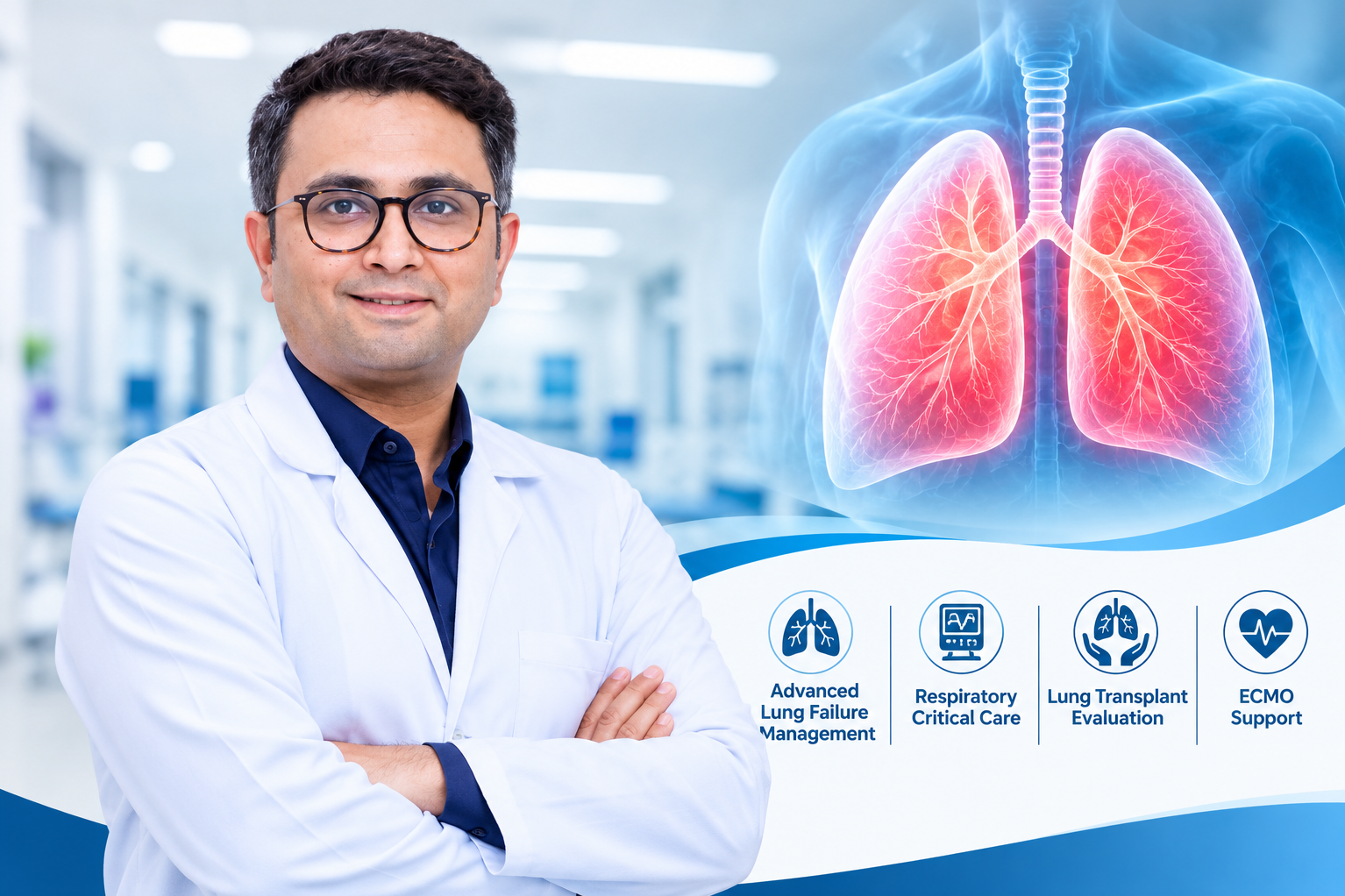
- Advanced Lung Failure Management
- Respiratory Critical Care
- ECMO Support
- Lung Transplant Evaluation
- Pre- and Post-Lung Transplant Care
- Interventional Pulmonology
- EBUS-TBNA
- Medical Thoracoscopy
- Pulmonary Rehabilitation
- Sleep Medicine
Dr. Shubham Sharma is associated with Narayana Hospital, Jaipur, as a Consultant in Clinical and Interventional Pulmonology and Respiratory Critical Care. He also consults at Rama Speciality Clinics, Pratap Nagar, Jaipur.
His international training and experience in transplant pulmonology support the evaluation and management of patients with complex respiratory conditions.
When Should You Consult a Lung Specialist?
Patients should consider consulting a pulmonologist if they experience persistent breathlessness, unexplained low oxygen levels, recurrent chest infections, worsening cough, or difficulty performing everyday activities due to breathing problems.
Patients already diagnosed with COPD, pulmonary fibrosis, ILD, or other advanced lung conditions may also benefit from regular specialist assessment.
Timely medical evaluation can help identify disease progression and determine whether additional respiratory support or advanced treatment options are required.
Conclusion
Lung failure requires careful evaluation, appropriate treatment, and ongoing medical supervision. Depending on the underlying condition, management may include medication, oxygen therapy, ventilatory support, ECMO, pulmonary rehabilitation, or lung transplant evaluation.
For patients seeking lung failure treatment and respiratory care in Jaipur, Dr. Shubham Sharma provides specialised pulmonology services, including advanced lung failure management, respiratory critical care, ECMO support, and transplant-related evaluation.
Early diagnosis and an individualised treatment approach can play an important role in managing complex respiratory conditions and improving patients' quality of life.
Frequently Asked Questions:
1. What is lung failure?
Lung failure is a condition in which the lungs cannot provide sufficient oxygen to the blood or remove carbon dioxide effectively. It may develop suddenly or progress over time.
2. Can lung failure be treated?
Treatment depends on the underlying cause and severity. Medical management, oxygen therapy, ventilatory support, ECMO, and lung transplantation may be considered in appropriate cases.
3. What is ECMO treatment for lung failure?
ECMO is an advanced life-support technique that temporarily supports oxygen exchange and carbon dioxide removal when the lungs are unable to perform these functions adequately.
4. When is a lung transplant required?
Lung transplantation may be considered for selected patients with advanced, irreversible lung disease when other treatment options are insufficient.
5. Who treats advanced lung failure in Jaipur?
Dr. Shubham Sharma is a Transplant and Interventional Pulmonologist in Jaipur with expertise in advanced lung failure management, respiratory critical care, ECMO support, and lung transplant evaluation.
6. What is the difference between acute and chronic respiratory failure?
Acute respiratory failure develops suddenly and may require emergency treatment. Chronic respiratory failure develops gradually and generally requires ongoing medical management.
7. Can pulmonary rehabilitation help patients with lung failure?
Pulmonary rehabilitation may help suitable patients improve exercise tolerance, manage breathlessness, and maintain daily activities.
Keywords