Advanced Diagnostic Test for Lung Diseases
Lung diseases and chest-related conditions often require accurate diagnosis to ensure timely and effective treatment. Conditions such as lung cancer, enlarged lymph nodes, tuberculosis, and other respiratory disorders may need specialised diagnostic procedures for proper evaluation. EBUS-TBNA (Endobronchial Ultrasound-Guided Transbronchial Needle Aspiration) is an advanced, minimally invasive diagnostic procedure that helps doctors examine structures around the airways and collect tissue or fluid samples from lymph nodes and other suspicious areas inside the chest.
For patients looking for an advanced EBUS-TBNA procedure in Jaipur, this technique offers an effective way to investigate certain lung and chest conditions without requiring conventional surgical biopsy in many cases.
What Is EBUS-TBNA?
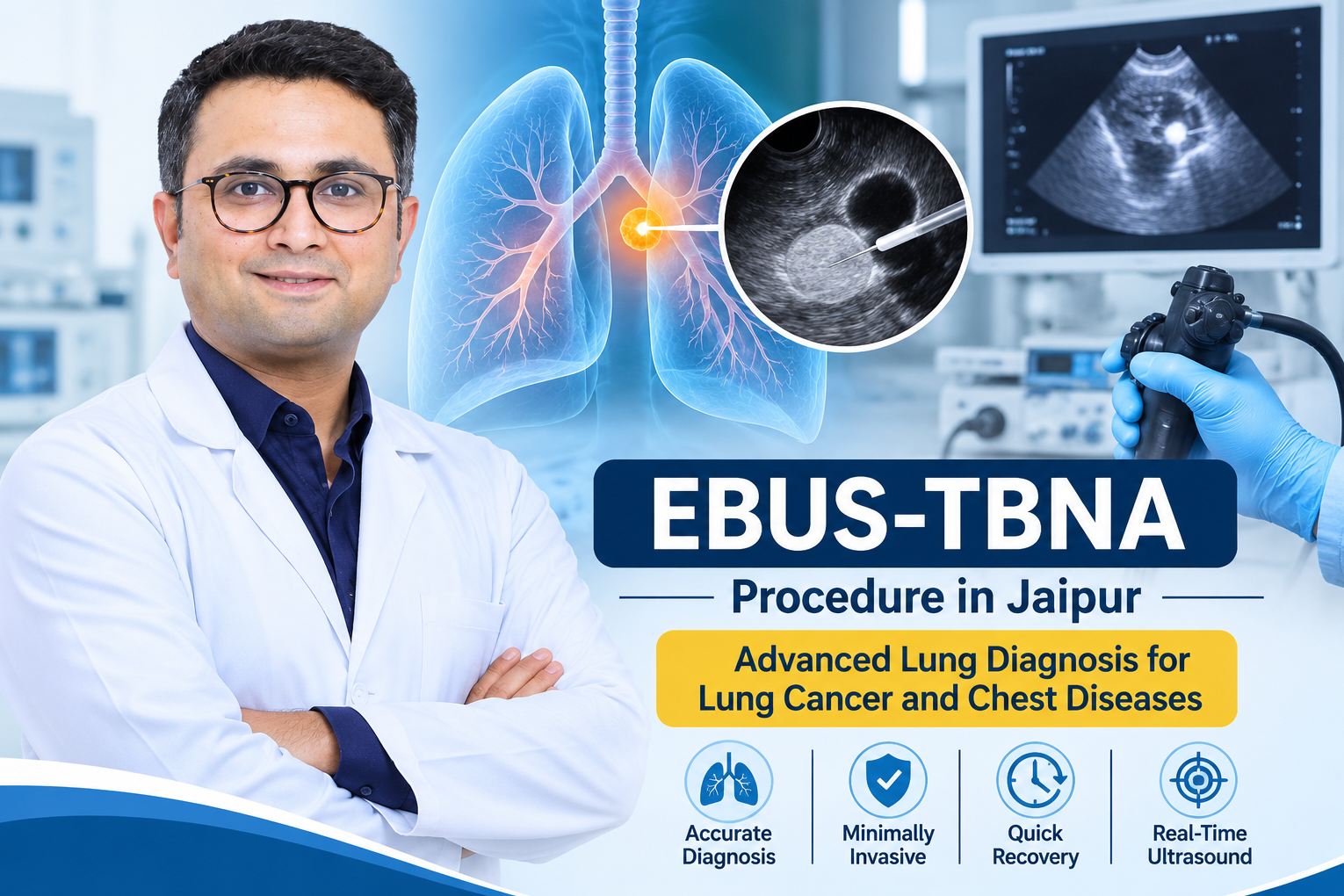
EBUS-TBNA is a specialised bronchoscopic procedure that combines endobronchial ultrasound technology with fine-needle aspiration. It uses a flexible bronchoscope equipped with a small ultrasound probe and a needle.
The ultrasound helps doctors view lymph nodes and other structures located near the airways. Using real-time ultrasound guidance, the doctor carefully inserts a thin needle through the airway wall to collect samples for laboratory examination.
These samples can help identify infections, inflammation, cancerous cells, and other abnormalities.
Why Is EBUS-TBNA Recommended?
Doctors may recommend EBUS-TBNA when imaging tests such as CT scans or PET-CT scans reveal enlarged lymph nodes or suspicious areas around the lungs.
Some common reasons for performing this procedure include:
- Lung Cancer Diagnosis: Helps collect tissue samples from suspicious lymph nodes and masses to investigate possible lung cancer.
- Lymph Node Evaluation: Examines enlarged lymph nodes located near the lungs and airways.
- Tuberculosis (TB): Helps investigate suspected tuberculosis involving chest lymph nodes.
- Mediastinal Lymphadenopathy: Evaluates enlarged lymph nodes in the mediastinum, the central area of the chest.
- Staging of Lung Cancer: Helps determine whether lung cancer has spread to nearby lymph nodes.
- Unexplained Chest Abnormalities: Assists in investigating certain abnormalities identified through chest imaging.
How Is the EBUS-TBNA Procedure Performed?
EBUS-TBNA is generally performed by a trained pulmonologist or bronchoscopist in a specialised medical setting.
The procedure usually involves the following steps:
1. Patient Preparation
Before the procedure, the medical team reviews the patient's medical history, imaging reports, medications, and relevant blood investigations. Patients may be advised to avoid eating or drinking for a specified period.
2. Administration of Sedation or Anaesthesia
Depending on the patient's condition and the hospital's protocol, sedation or general anaesthesia may be used to improve comfort during the procedure.
3. Insertion of the EBUS Bronchoscope
A thin, flexible bronchoscope containing an ultrasound probe is gently inserted through the mouth into the airways.
4. Ultrasound Examination
The ultrasound probe provides real-time images of lymph nodes and structures surrounding the bronchial tubes. This allows the doctor to identify the appropriate sampling locations.
5. Needle Aspiration
A fine needle is passed through the airway wall under ultrasound guidance to collect small tissue or fluid samples from the targeted lymph nodes or suspicious areas.
6. Laboratory Examination
The collected samples are sent for cytological, histopathological, microbiological, or other specialised tests, depending on the suspected condition.
Key Benefits of EBUS-TBNA
EBUS-TBNA has become an important diagnostic tool in modern respiratory medicine because of its minimally invasive approach.
Some important benefits include:
- Minimally Invasive Technique: Usually avoids the need for surgical biopsy to access many chest lymph nodes.
- Real-Time Ultrasound Guidance: Helps doctors identify and target suspicious lymph nodes accurately.
- Lung Cancer Staging: Helps evaluate lymph nodes to determine the extent of lung cancer.
- Diagnosis of Multiple Conditions: Can assist in diagnosing cancer, tuberculosis, and certain inflammatory conditions.
- Reduced Recovery Time: Most patients can return home the same day, depending on their clinical condition and hospital protocol.
- Lower Surgical Risk: Avoids some risks associated with more invasive surgical diagnostic procedures.
Is EBUS-TBNA a Safe Procedure?
EBUS-TBNA is generally considered a safe procedure when performed by an experienced specialist with appropriate medical support. However, like any medical procedure, it may involve certain risks.
Possible complications include:
- Mild sore throat or cough.
- Temporary hoarseness.
- Minor bleeding at the sampling site.
- Infection.
- Rarely, complications such as pneumothorax or significant bleeding.
Patients should discuss their medical history, existing health conditions, and possible risks with their treating doctor before undergoing the procedure.
What Happens After the EBUS-TBNA Procedure?
After the procedure, patients are monitored until the effects of sedation or anaesthesia have sufficiently worn off.
Some patients may experience a mild sore throat, cough, or temporary throat irritation. These symptoms generally improve with time.
The collected samples are examined in the laboratory, and the results help the doctor determine the next steps in diagnosis and treatment.
The time required to receive reports depends on the type of laboratory testing needed.
Who May Need an EBUS-TBNA Test?
A doctor may recommend EBUS-TBNA for patients who:
- Have suspicious lung nodules or masses.
- Show enlarged chest lymph nodes on CT or PET-CT scans.
- Require confirmation or staging of suspected lung cancer.
- Have unexplained mediastinal lymphadenopathy.
- Need further investigation of certain chest infections or inflammatory conditions.
The decision to perform EBUS-TBNA depends on the patient's symptoms, imaging findings, medical history, and clinical assessment.
Why Choose Advanced EBUS-TBNA Diagnosis in Jaipur?
Early and accurate diagnosis plays an important role in managing lung diseases. EBUS-TBNA provides doctors with a minimally invasive method to obtain samples from areas that may otherwise be difficult to access.
Patients searching for EBUS-TBNA in Jaipur should consider consulting an experienced pulmonologist or respiratory specialist who can evaluate their condition, review imaging reports, explain the procedure, and recommend appropriate diagnostic investigations.
Access to advanced bronchoscopic facilities, trained medical professionals, and specialised laboratory support can help ensure a comprehensive diagnostic evaluation.
Frequently Asked Questions (FAQs)
1. What is the full form of EBUS-TBNA?
EBUS-TBNA stands for Endobronchial Ultrasound-Guided Transbronchial Needle Aspiration. It is a minimally invasive procedure used to collect samples from lymph nodes and suspicious areas around the airways.
2. Is EBUS-TBNA used to diagnose lung cancer?
Yes. EBUS-TBNA is commonly used to obtain samples from suspicious lymph nodes and certain masses to help diagnose and stage lung cancer.
3. Is EBUS-TBNA a painful procedure?
The procedure is generally performed under sedation or anaesthesia, so patients usually experience minimal discomfort during it.
4. How long does an EBUS-TBNA procedure take?
The procedure commonly takes around 30–60 minutes, although the duration may vary depending on the number and location of sampling sites and the patient's condition.
5. Is hospital admission required after EBUS-TBNA?
Many patients can go home on the same day after observation. However, some may require longer monitoring depending on their health and clinical condition.
6. Can EBUS-TBNA detect tuberculosis?
Yes. Samples collected through EBUS-TBNA can be sent for appropriate microbiological and molecular tests to investigate tuberculosis involving chest lymph nodes.
7. Where can I consult for EBUS-TBNA in Jaipur?
Patients can consult a qualified pulmonologist or respiratory specialist in Jaipur to determine whether EBUS-TBNA is suitable for their condition.
Conclusion
EBUS-TBNA is an advanced diagnostic technique that has significantly improved the evaluation of lung diseases, enlarged lymph nodes, and suspected lung cancer. Its minimally invasive approach, real-time ultrasound guidance, and ability to obtain samples from difficult-to-reach chest structures make it an important tool in modern respiratory medicine.
If you are looking for an EBUS-TBNA procedure in Jaipur, consult an experienced respiratory specialist for proper evaluation and guidance. Early diagnosis can help doctors plan appropriate treatment and improve the management of various lung and chest conditions.
Keywords