ECMO Therapy for Critical Respiratory Conditions | Dr. Shubham Sharma
Understanding ECMO Therapy
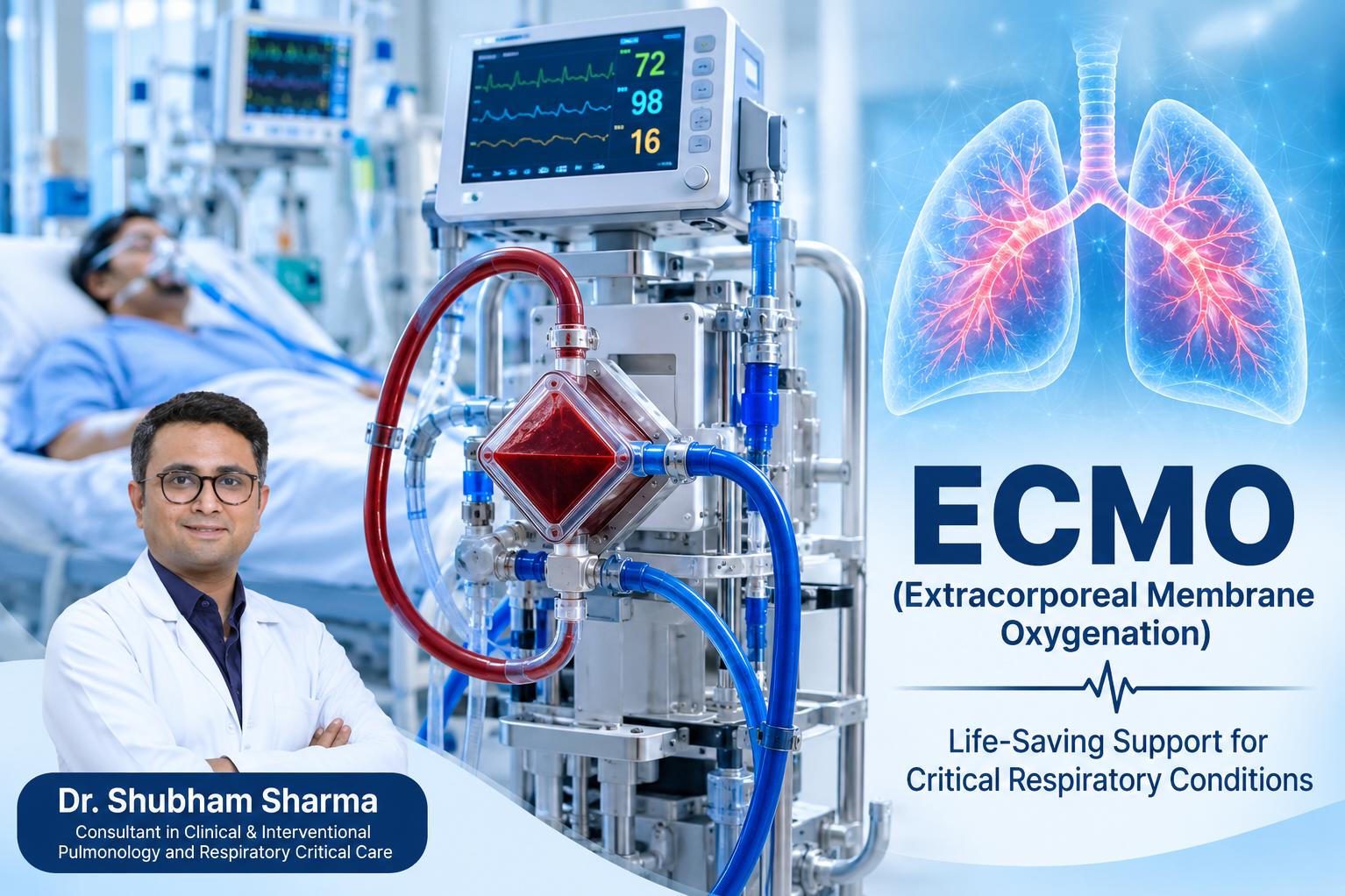
ECMO stands for Extracorporeal Membrane Oxygenation. It is a specialised medical support system that temporarily performs some of the functions of the lungs and, in certain cases, the heart. Blood is circulated through an external machine where carbon dioxide is removed and oxygen is added before the blood is returned to the body.
ECMO therapy is generally considered for critically ill patients whose oxygen levels remain dangerously low or whose carbon dioxide levels remain high despite appropriate conventional treatment. It provides additional time for the lungs to heal or for doctors to plan further treatment, including lung transplantation when appropriate.
When Is ECMO Therapy Required?
ECMO may be considered when severe respiratory or cardiopulmonary conditions do not respond adequately to conventional medical management.
Some conditions in which ECMO support may be evaluated include:
- Acute Respiratory Distress Syndrome (ARDS): A serious condition that causes widespread lung inflammation and difficulty maintaining oxygen levels.
- Severe Pneumonia: Serious lung infections that can lead to life-threatening respiratory failure.
- Post-COVID Lung Failure: Severe respiratory complications following viral infections.
- Acute Exacerbation of Interstitial Lung Disease (ILD): Sudden worsening of lung function requiring intensive respiratory support.
- Severe Hypoxemia: Extremely low blood oxygen levels despite respiratory treatment.
- Severe Hypercapnic Respiratory Failure: A condition in which the lungs cannot remove sufficient carbon dioxide.
- Lung Transplant Support: ECMO may be used as temporary respiratory support for selected patients awaiting lung transplantation.
The decision to initiate ECMO depends on the patient's overall condition, the underlying disease, potential for recovery and response to other treatments.
Types of ECMO Support
There are two major types of ECMO support used in critical care:
1. VV-ECMO (Veno-Venous ECMO)
VV-ECMO primarily supports lung function. Blood is withdrawn from a vein, passed through an oxygenator to add oxygen and remove carbon dioxide, and returned to the venous circulation.
It may be considered for patients experiencing:
- Severe ARDS
- Life-threatening pneumonia
- Severe respiratory failure
- Acute worsening of certain interstitial lung diseases
- Respiratory failure requiring support before lung transplantation
2. VA-ECMO (Veno-Arterial ECMO)
VA-ECMO provides support to both the heart and lungs by circulating oxygenated blood into the arterial system. It may be considered in selected patients with severe cardiac or combined cardiopulmonary failure.
Conditions may include:
- Cardiogenic shock
- Cardiac arrest in selected circumstances
- Severe heart and lung dysfunction
The appropriate ECMO type is selected by the treating medical team after evaluating the patient's clinical requirements.
How Does the ECMO Procedure Work?
ECMO is performed in a specialised intensive care environment by a trained multidisciplinary team.
The procedure generally involves the following steps:
1. Patient Evaluation: Doctors assess the patient's respiratory and cardiovascular condition, blood gas reports, oxygen requirements and response to existing treatments.
2. Cannula Placement: Specialised tubes called cannulas are inserted into selected blood vessels to establish blood circulation through the ECMO circuit.
3. Blood Oxygenation: Blood passes through an artificial membrane oxygenator, where oxygen is added and carbon dioxide is removed.
4. Continuous Monitoring: The medical team continuously monitors oxygen levels, blood flow, clotting parameters, organ function and possible complications.
5. Recovery and Weaning: When the underlying condition improves, ECMO support may gradually be reduced. The patient is carefully evaluated before the machine is disconnected.
Benefits of ECMO Therapy
ECMO is an important supportive treatment option for carefully selected critically ill patients.
Potential benefits include:
- Provides temporary oxygenation and carbon dioxide removal.
- Allows severely affected lungs to rest and recover.
- Can reduce the need for potentially harmful levels of mechanical ventilation.
- Supports selected patients with severe cardiopulmonary failure.
- May provide a bridge to lung transplantation in suitable patients.
- Gives doctors additional time to manage the underlying medical condition.
However, ECMO is not a cure for respiratory disease. Its success depends on several factors, including the underlying condition, the patient's overall health and the response to treatment.
Risks and Complications of ECMO
Although ECMO can provide essential life support, it is a complex procedure associated with potential complications.
Possible risks include:
- Bleeding due to anticoagulation medicines.
- Blood clot formation within the circuit.
- Infection.
- Blood cell damage.
- Stroke or neurological complications.
- Kidney or other organ complications.
Continuous monitoring and specialised critical care management are essential throughout ECMO treatment.
ECMO Support and Lung Transplantation
For selected patients with advanced lung disease, ECMO may serve as a bridge to lung transplantation. It can provide temporary respiratory support while the patient undergoes transplant evaluation or waits for a suitable donor organ.
The suitability of ECMO as a bridge to transplantation depends on the patient's overall medical condition, transplant eligibility and multidisciplinary assessment.
ECMO Care Under Dr. Shubham Sharma
Dr. Shubham Sharma is a Consultant in Clinical and Interventional Pulmonology, Lung Transplantation and Respiratory Critical Care in Jaipur.
His qualifications include:
- MBBS
- Diplomate of National Board (Respiratory Diseases)
- European Diploma in Adult Respiratory Medicine, Madrid, Spain
- Fellowship in Lung Transplantation, Medical University of Vienna
His clinical interests include advanced lung failure management, respiratory critical care, interventional pulmonology and lung transplantation.
ECMO-related care requires coordinated efforts from pulmonologists, intensivists, cardiac surgeons, perfusionists and critical care nursing teams. Patient assessment, timely treatment decisions, continuous monitoring and recovery planning are important parts of this process.
When Should You Consult a Pulmonologist?
Patients experiencing severe breathing difficulties, persistent low oxygen levels, worsening respiratory infections or complications from chronic lung diseases require timely medical evaluation.
Patients already admitted to an ICU with severe respiratory failure may need assessment by a specialised critical care and ECMO team to determine whether ECMO support is appropriate.
Early consultation can help doctors evaluate available treatment options and plan further management.
Frequently Asked Questions:
1. What is ECMO therapy used for?
ECMO is used to provide temporary heart and lung support in selected critically ill patients who are not responding adequately to conventional treatment.
2. Is ECMO a treatment for severe respiratory failure?
Yes. ECMO can provide temporary respiratory support in selected patients with severe respiratory failure, particularly when mechanical ventilation and other appropriate treatments are insufficient.
3. How long can a patient remain on ECMO?
The duration varies depending on the underlying disease, organ function and recovery. Some patients require support for several days, while others may need it for several weeks.
4. Is ECMO the same as a ventilator?
No. A ventilator supports breathing by moving air into and out of the lungs. ECMO circulates blood through an external oxygenator to add oxygen and remove carbon dioxide.
5. Can ECMO help patients waiting for a lung transplant?
Yes. In carefully selected patients, ECMO can provide temporary support while they await lung transplantation.
6. Is ECMO safe?
ECMO is a complex life-support procedure with significant risks. Careful patient selection, specialised equipment and continuous monitoring are essential.
Consult Dr. Shubham Sharma for ECMO and Respiratory Critical Care
For patients with severe respiratory conditions, timely evaluation by a pulmonologist and critical care team can help identify appropriate treatment options. Dr. Shubham Sharma provides consultation for advanced lung failure, respiratory critical care and lung transplant-related evaluation in Jaipur.
Dr. Shubham Sharma – Pulmonologist & Lung Transplant Specialist
Clinic: Rama Speciality Clinics, Pratap Nagar, Jaipur, Rajasthan.
Appointment: 08048060946
WhatsApp: 9024248683
Website: https://www.drshubhamsharma.com
Keywords